
Written By Sarah Warren, PA-C
An occupational injury can halt productivity, create administrative complexity, and introduce uncertainty for both employees and employers. When an acute workplace injury occurs, accessing timely, specialized medical evaluation is essential to establish an accurate diagnosis, initiate evidence-based treatment, and lay the groundwork for a safe, structured return to work.
Understanding the clinical pathway -from the initial medical evaluation to definitive follow-up care – helps employers and injured workers navigate occupational health with confidence.
Step 1: Immediate Triage and Initial Clinical Evaluation
When an employee experiences an acute workplace injury such as a laceration, musculoskeletal strain, acute joint sprain, minor burn, or repetitive motion flare-up, the first critical step is medical triage and evaluation at an urgent care center equipped for occupational medicine.
During the initial encounter, the occupational health provider focuses on three core medical clinical elements:
- Detailed History of Injury: Documenting the mechanism of injury, exact timeline, job duties performed at the time of the event, and any pre-existing medical conditions affecting the injured site.
- Comprehensive Physical Examination: Assessing range of motion, neurovascular status, focal tenderness, deformity, and structural stability.
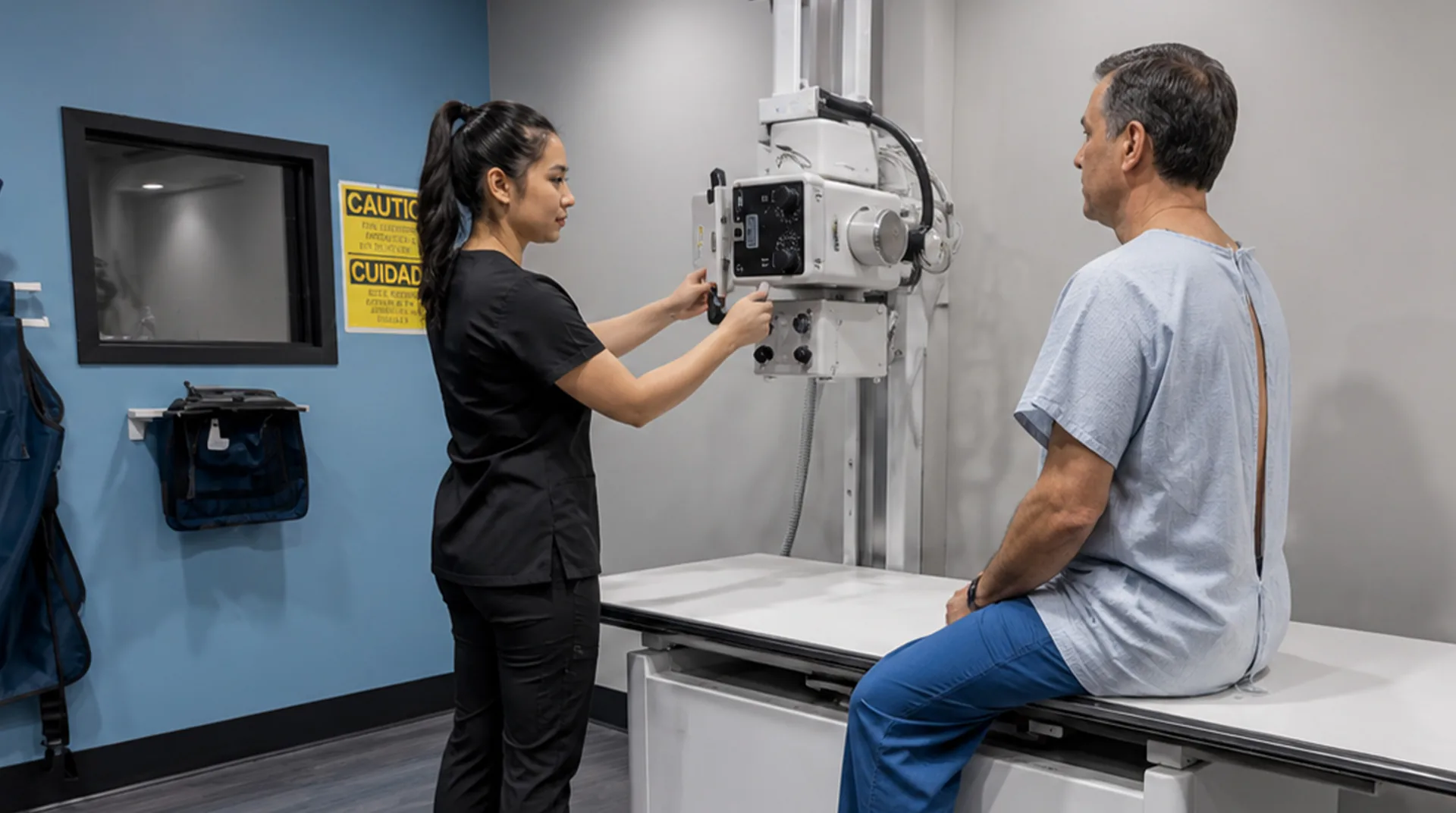
- Diagnostic Imaging and Testing: Utilizing on-site digital X-rays to rule out fractures or dislocations, as well as conducting rapid diagnostic screenings or wound assessments as indicated.
Step 2: Emergency Department Escalation vs. Urgent Care Management
Distinguishing between injuries safe for urgent care management and severe trauma requiring immediate referral to an Emergency Department (ED) is critical for patient safety and appropriate triage.
Urgent Care Management (Appropriate for Occupational Health Clinics)
- Minor to Moderate Lacerations: Wounds requiring primary repair (sutures, staples, or skin adhesive) without nerve, tendon, or major arterial involvement.
- Closed Fractures & Sprains: Non-displaced or simple fractures of fingers, toes, wrist, or ankle, as well as joint sprains and strains.
- Minor Burns: First-degree and limited superficial second-degree burns without facial, perineal, or circumferential involvement.
- Eye Irritations: Foreign body removal not involving corneal penetration, minor chemical splashes after immediate flushing, and simple corneal abrasions.
Step 3: Treatment, Work Status, and Initial Return-to-Work Directives
Once the acute injury is diagnosed and stabilized, evidence-based management focuses on early functional recovery. The American Academy of Family Physicians (AAFP) emphasizes that medically appropriate, early return to modified work supports faster recovery and reduces long-term disability.
During this stage, the care provider formulates a clear clinical management plan:
- Acute Medical Intervention: Tetanus vaccination updates, wound dressing, splinting/immobilization, and prescriptions or over-the-counter anti-inflammatory management.
- Functional Capacity & Work Restrictions: Formulating precise medical work status orders. Rather than placing a worker on complete off-duty status, providers outline specific physical capabilities (e.g., “No lifting over 10 lbs,” “Seated desk work only,” “No repetitive grasping with right hand”).
- Workers’ Compensation Documentation: Completing necessary state-mandated Work Comp initial medical reports and providing clear documentation to both the employee and employer.
Step 4: Re-evaluation, Physical Therapy, and Follow-Up Care
Occupational injuries require structured, continuous reassessment to monitor tissue healing and safely advance physical activity.
Follow-Up Care Protocol
- Re-evaluation Visits: Scheduled soon after initial injury to re-examine wound healing, re-assess joint mobility, and adjust work restrictions based on objective functional progress.
- Physical Therapy Referral: Initiating targeted physical or occupational therapy for persistent soft tissue injuries, post-immobilization stiffness, or ergonomics-focused rehabilitation.
- Definitive Return-to-Work Clearance: Gradual modification of work restrictions until full, unrestricted duty status is safely achieved.
Frequently Asked Questions
What paperwork should an employee bring to urgent care for a workplace injury?
Employees should bring photo identification, employer contact information, details regarding the company’s Workers’ Compensation insurance carrier, and any specific injury reporting forms provided by their supervisor or HR department.
Can an urgent care clinic prescribe physical therapy for work-related injuries?
Yes. Occupational urgent care providers frequently evaluate musculoskeletal injuries and can order targeted Physical Therapy (PT) or Occupational Therapy (OT) programs designed specifically for job-related functional rehabilitation.
What happens if an employee's condition worsens between initial evaluation and follow-up?
If an employee experiences worsening pain, spreading redness or swelling (signs of infection), sudden numbness, or inability to bear weight, they should return to the urgent care clinic immediately for urgent re-evaluation. If severe symptoms such as high fever or neurovascular loss occur, they must seek emergency room care right away.