
Abdominal Pain
Stomach Pain?
Let's Find Out What's Wrong.
From sudden stomach cramps to persistent abdominal discomfort, our providers evaluate your symptoms, identify possible causes, and recommend appropriate treatment to help you feel better.
Answers and care when stomach pain strikes.
9+ Convenient Locations
Care close to home.
Short Wait Times
Get in. Get out. Get better.
Most Insurance Accepted
Care made easy.
Telemed Visits Available
Care wherever you are.
ABDOMINAL PAIN CARE IN LANSING
Understanding Your Pain Is the
First Step Toward Relief.
Abdominal pain can range from mild discomfort to persistent cramping, bloating, or tenderness. With many possible causes, understanding your symptoms is important. Lansing Urgent Care provides convenient evaluations to help determine what may be causing your pain and whether additional care is needed.
Locate
the Pain
Where your stomach hurts can provide important clues. Our providers assess the location, severity, and duration of your abdominal pain.
Explore
Possible Causes
Abdominal discomfort may be related to indigestion, constipation, infections, or other digestive conditions. We help identify potential causes through medical evaluation.
Evaluate
Symptoms
Bloating, nausea, cramping, and changes in bowel habits can accompany abdominal pain. We consider these symptoms together to better understand your condition.
Determine
Next Steps
Depending on your symptoms, our providers may recommend testing, medication, supportive care, or further evaluation at another medical facility.
Know When
It's Serious
Some abdominal conditions require emergency attention. We help recognize concerning symptoms and determine when a higher level of care is necessary.

Don't Ignore What
Your Stomach Is Telling You.
Abdominal pain can develop for many reasons, including digestive problems, inflammation, infections, and other medical conditions. Whether you’re experiencing occasional cramping or ongoing discomfort, Lansing Urgent Care can evaluate your symptoms, discuss possible causes, and recommend appropriate treatment or additional medical care.
Walk in
Anytime
No
appointment
needed.
Expert
Care
Experienced
providers you
can trust.
Personalized
Treatment
Care plans
tailored to
your needs.
Relief
That Lasts
Focused on long
term recovery
& wellness.
be seen from home.

- our services in lansing
Healthcare is our Specialty
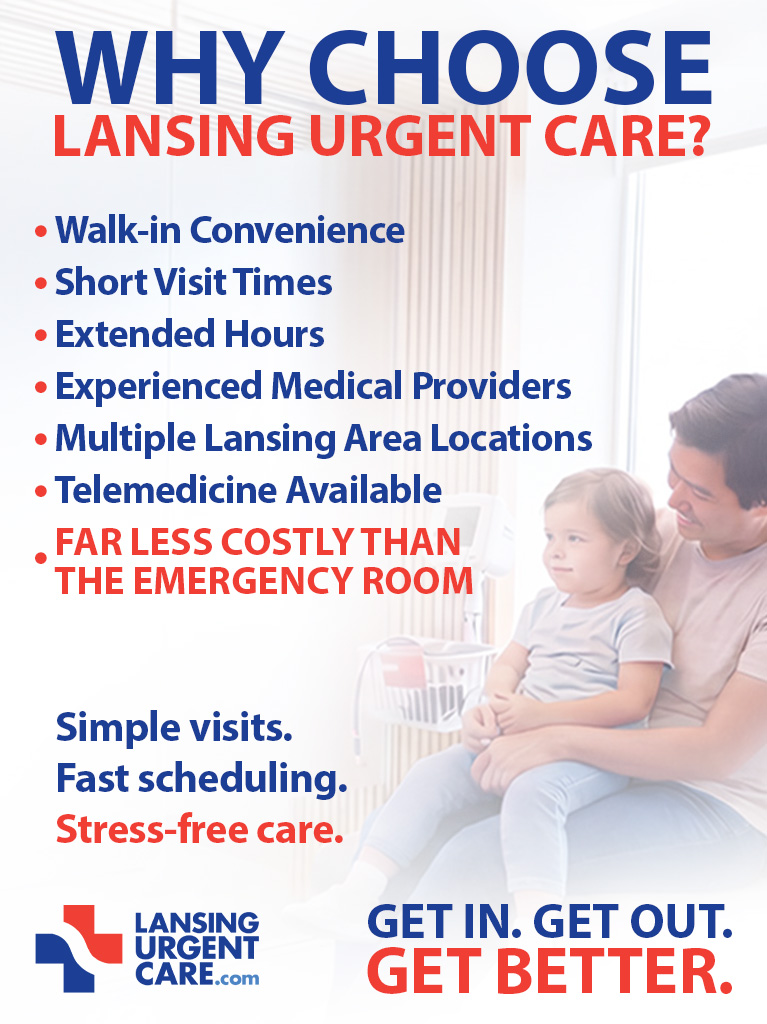
Whether it’s a sprain, sore throat, or school physical, Lansing Urgent Care is here for life’s unexpected moments. Our skilled medical team offers a wide range of walk in services so you can get quality care, close to home, without the long wait or high cost of the ER.
Cuts, Wounds & Procedures
Illness, Allergy & Infection Care
Injury & Pain Care
Occupational & Employer Services
Physicals & Exams
Testing & Diagnostics
On-site Medications
One Visit. Complete Care. Get the evaluation and treatment you need, with medications available on site when appropriate.
Virtual Care
with convenient online visits
for common illnesses and
follow-ups.
Get seen sooner!
place in line. No appointment needed
at any of our 9 locations.
- FAQS
Frequently Asked
Abdominal Pain
Questions
We’re here to make your visit as easy as possible.
Below are answers to common questions about abdominal pain.
What causes abdominal pain?
Abdominal pain can have many causes, including indigestion, gas, constipation, stomach viruses, food poisoning, acid reflux, urinary tract infections, and other digestive conditions. The location, severity, and duration of your pain can help determine the possible cause.
When should I go to Lansing Urgent Care for abdominal pain?
Visit Lansing Urgent Care for mild to moderate abdominal pain that persists, keeps returning, or is accompanied by symptoms such as nausea, diarrhea, constipation, or urinary discomfort. Sudden or severe abdominal pain should be evaluated in an emergency room.
Can Lansing Urgent Care treat stomach pain?
Yes. Our providers evaluate many causes of non emergency stomach and abdominal pain. Depending on your symptoms, treatment may include medication, diagnostic testing, supportive care, or referral for additional evaluation.
What does pain in different areas of the abdomen mean?
The location of abdominal pain can provide clues about its cause. Upper abdominal pain may be related to indigestion or gallbladder problems, while lower abdominal pain may involve the intestines, bladder, or reproductive organs. Right lower abdominal pain can sometimes indicate appendicitis and requires prompt evaluation.
How do I know if my abdominal pain is serious?
Warning signs include severe or worsening pain, a rigid or swollen abdomen, persistent vomiting, bloody stools, fainting, or fever with significant abdominal tenderness. These symptoms may indicate a serious condition requiring emergency care.
Can constipation or gas cause severe stomach pain?
Yes. Constipation and trapped gas can cause cramping, bloating, pressure, and abdominal discomfort. However, severe or persistent pain should not automatically be attributed to gas or constipation because other medical conditions can cause similar symptoms.
Can Lansing Urgent Care test for the cause of abdominal pain?
Yes. Depending on your symptoms, our providers may recommend urine testing, pregnancy testing, blood work, or other diagnostic services. Some conditions require ultrasound, CT imaging, or additional testing at a hospital.
What is the difference between stomach pain and abdominal pain?
Stomach pain usually refers to discomfort associated with the stomach itself, while abdominal pain can involve several organs, including the intestines, liver, gallbladder, kidneys, and bladder. Patients often use the terms interchangeably.
How can I relieve mild abdominal pain at home?
Rest, drinking fluids, eating smaller meals, and avoiding foods that worsen symptoms may help with mild abdominal discomfort. Treatment depends on the underlying cause, so persistent or worsening pain should be evaluated rather than repeatedly treated at home.
When should I go to the emergency room for abdominal pain?
Seek emergency care for sudden or severe abdominal pain, pain following significant injury, vomiting blood, black or bloody stools, fainting, a rigid abdomen, or abdominal pain during pregnancy. Severe pain accompanied by chest pain or difficulty breathing also requires emergency attention.