

CONCUSSIONS
Expert Concussion Care
When Every Moment Matters
Get prompt evaluation for possible concussions following falls, sports injuries, or accidents. Our providers assess symptoms such as headaches, dizziness, nausea, and confusion to help determine the appropriate next steps.
Get answers and guidance with same day care.
9 Area Locations
Care close to home
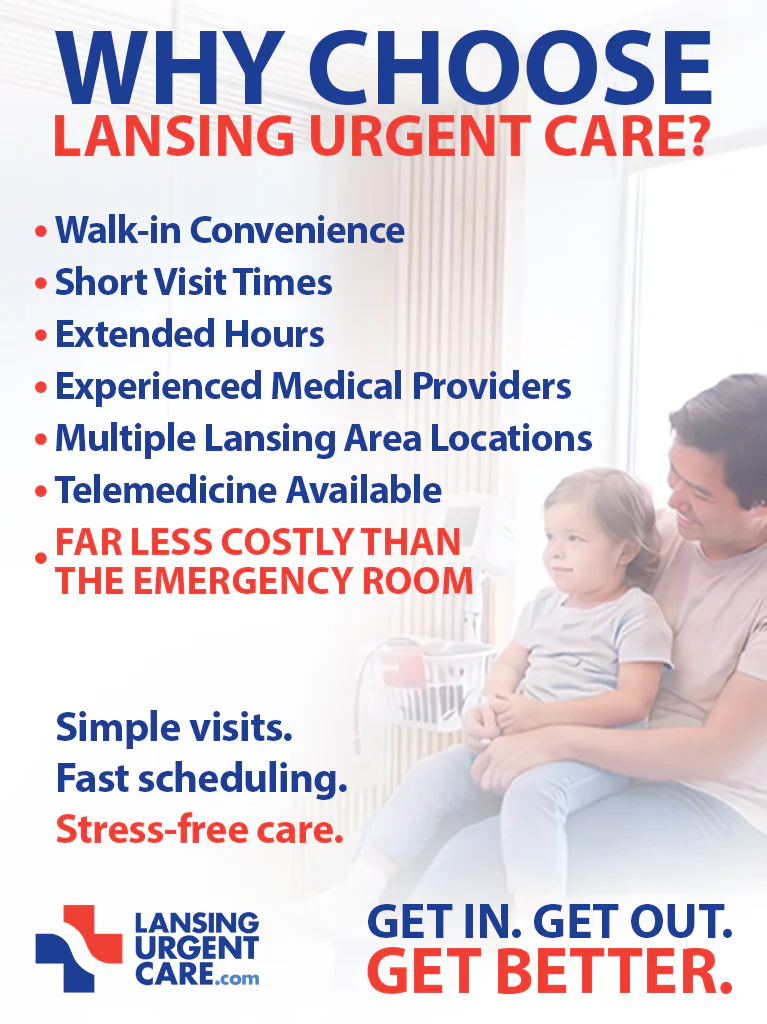
Short Wait Times
Get in. Get out. Get better.
Most Insurance Accepted
Billing made easy
Telemed Visits Available
Care from wherever you are
CONCUSSION CARE IN LANSING
Expert Concussion Evaluation
Guidance for a Safe Recovery
From sports injuries and falls to unexpected accidents, concussions can cause headaches, dizziness, nausea, confusion, and sensitivity to light. Lansing Urgent Care provides initial evaluation for possible concussions, helping identify symptoms, determine when emergency testing is needed, and guide patients toward appropriate follow up care and recovery.
Assess
Symptoms
Our providers evaluate possible concussion symptoms, including headaches, dizziness, nausea, balance difficulties, and changes in concentration following a head injury.
Evaluate
Injuries
Receive an initial assessment of your injury, including how it happened, your symptoms, and factors that may require additional medical attention.
Identify
Warning Signs
Learn about important concussion warning signs, including worsening headaches, repeated vomiting, confusion, and neurological changes that require emergency care.
Recovery
Guidance
Receive recommendations for appropriate rest, gradual return to everyday activities, and follow up care based on your symptoms and injury.
Prevent Future
Injuries
Get practical guidance on concussion precautions, avoiding repeat head injuries, and safely returning to sports and physical activities with appropriate clearance.

Concussion Evaluation
for a Safer Recovery
Concussions can occur after sports injuries, falls, car accidents, or other impacts to the head. Symptoms may include headaches, dizziness, nausea, sensitivity to light, and difficulty concentrating. Lansing Urgent Care provides initial evaluations for possible concussions, helping patients understand their symptoms, recognize warning signs, and determine whether emergency care or additional medical attention is needed.
Walk in
Anytime
No
appointment
needed.
Expert
Care
Experienced
providers you
can trust.
Personalized
Treatment
Care plans
tailored to
your needs.
Relief
That Lasts
Focused on long
term recovery
& wellness.
be seen from home.

- our services in lansing
Healthcare is our Specialty
Whether it’s a sprain, sore throat, or school physical, Lansing Urgent Care is here for life’s unexpected moments. Our skilled medical team offers a wide range of walk in services so you can get quality care, close to home, without the long wait or high cost of the ER.
Cuts, Wounds & Procedures
Illness & Infection Care
Injury & Pain Care
Occupational & Employer Services
Physicals & Exams
Testing & Diagnostics
On-site Medications
One Visit. Complete Care. Get the evaluation and treatment you need, with medications available on site when appropriate.
Virtual Care
with convenient online visits
for common illnesses and
follow-ups.
Get seen sooner!
place in line. No appointment needed
at any of our 9 locations.
- FAQS
Frequently Asked
Concussion Questions
We’re here to make your visit as easy as possible.
Below are answers to common questions about concussions.
What is a concussion?
A concussion is a type of traumatic brain injury caused by a bump, blow, or jolt to the head or body that causes the brain to move rapidly inside the skull. It can temporarily affect memory, balance, concentration, and other brain functions.
What are the most common symptoms of a concussion?
Common symptoms include headache, dizziness, nausea, confusion, sensitivity to light or noise, blurred vision, fatigue, and difficulty concentrating. Symptoms may appear immediately or develop hours after the injury.
Can Lansing Urgent Care diagnose a concussion?
Lansing Urgent Care can evaluate selected patients with mild head injuries and possible concussion symptoms. A provider may assess neurological function, balance, memory, and symptoms to determine whether emergency evaluation or additional testing is necessary.
How do I know if I have a concussion?
A concussion may be suspected after a head injury if you develop a headache, dizziness, confusion, nausea, memory problems, or unusual fatigue. You do not need to lose consciousness to have a concussion. A medical evaluation is recommended.
How long does a concussion take to heal?
Many people improve within several weeks, although recovery varies depending on age, injury severity, previous concussions, and other factors. Some people experience symptoms for longer and require additional medical follow up.
Can you have a concussion without hitting your head?
Yes. A sudden impact to the body, such as during a sports collision or car accident, can cause the head and brain to move rapidly enough to produce a concussion.
Should I sleep after a concussion?
Sleep is important for recovery, and most people with a concussion do not need to stay awake. However, a medical professional should first evaluate concerning symptoms and determine whether monitoring or emergency care is needed.
What should I avoid after a concussion?
Avoid activities that could cause another head injury. Brief relative rest during the first 24 to 48 hours is generally recommended, followed by a gradual return to light activity as tolerated. Avoid sports until medically cleared.
When is a concussion an emergency?
Call 911 or seek emergency care for a worsening severe headache, repeated vomiting, seizures, increasing confusion, weakness, slurred speech, unequal pupils, or difficulty waking after a head injury.
Can children get concussions?
Yes. Children and teenagers can experience concussions from sports, playground accidents, falls, and other injuries. Suspected concussions in children require prompt medical assessment, and return to sports should follow medical guidance.